
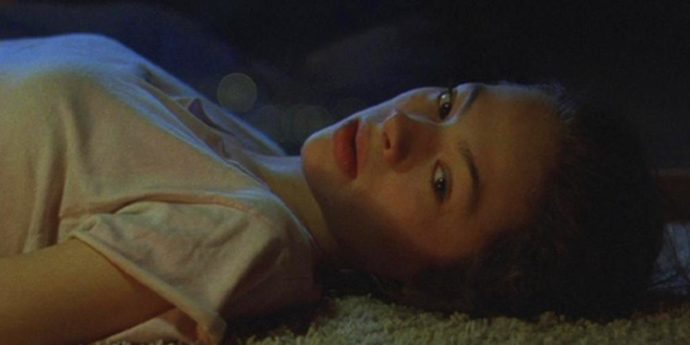
After beforehand discussing the brief movies of Bong Joon-Ho, Alma Har’el, Céline Sciamma, and the Safdies, this new batch of early shorts comes from the minds of recent Oscar winners and should-be nominees. These administrators have burst onto the scene within the final 5 years with characteristic debuts or follow-ups that have been adored audiences and critics alike. Barry Jenkins and Taika Waititi received Academy Awards for Finest Tailored Screenplay for “Moonlight” and “Jojo Rabbit,” respectively, whereas Lulu Wang”s “The Farewell” and Mati Diop’s “Atlantics” put the administrators firmly into folks’s minds with their very own cultural touchstone tales.
From scholar movies to preliminary successes, all of those administrators adopted a distinct, winding street to rise from obscurity to impartial notoriety. By and huge, these administrators write and direct tales that have an effect on necessary swaths of society, tens of millions of those that look to movie to chortle, cry, and see themselves represented. Whenever you hint these filmmakers’ shorts to their most up-to-date options, you discover similarities and early indications that every of them has a knack for crafting tales that matter.
Barry Jenkins: from “My Josephine” (2003) to “If Beale Road Might Speak”
After profitable Finest Tailored Screenplay and Finest Image Oscars for “Moonlight,” Jenkins made “If Beale Road Might Speak,” incomes him one other Oscar nomination, and one his actors one other win (Regina King for Finest Supporting Actress). His distinct type of constructing resonant movies with unseen tales (and underrepresented characters) has created a loyal fan base within the prolonged movie group. Jenkins’s first brief, “My Josephine,” continues this stylized intimacy usually present in his options. Made in school at Florida State, Jenkins’s brief additionally options his first collaboration with cinematographer James Laxton, who went on to shoot each “Moonlight” and “If Beale Road Might Speak.”
“My Josephine” facilities on Aadid (Basel Hamdan), a younger man working in an area laundromat post-9/11. Launched in 2003, the nine-minute brief explores Aadid’s relationship to his co-worker, Adela (Saba Shariat), as he compares her to Napoleon Bonaparte’s first spouse Josephine. Coloured to perfection with hues of inexperienced and blue, Jenkins’s first definitive stab at filmmaking depends much less on story or plot, and extra on intimacy. The scholar brief options an efficient time-lapse, absorbing but easy visuals, and the identical model of closeness we affiliate with the Oscar-winning director.
The driving power of the movie is Aadid’s love for Adela, as they wash and fold American flags every evening, a free observe they started a while in the past. Jenkins makes use of voiceover from his protagonist to elucidate his emotions and his would-be associate, speaking solely when it’s vital, and leaving bunches of soundless time. “My Josephine” even has the signature Jenkins character-looking-through-the-camera shot, a visible staple that bounds him to the understanding and private nature of affection. And that continues to be the important thing to “My Josephine” and to Jenkins’ motion pictures: a harmonious means of portraying love in easy phrases for advanced folks.
Lulu Wang: from “Contact” (2015) to “The Farewell”
Lulu Wang’s second characteristic “The Farewell” introduced the author/director to prominence in 2019, profitable her an Impartial Spirit Award, and being snubbed in most’s eyes by the Academy. Her movie portrayed an unimaginable conflict of cultures, as a Chinese language-American household grappled with the dealing with of a matriarch’s analysis. “The Farewell” is so robust as a result of it explains the intergenerational divide amongst households, particularly amongst immigrant fathers, moms, sons, daughters, and grandparents. Wang’s film gave her an opportunity to showcase her means to craft narrative options from true tales, splicing collectively a chunk of artwork that packs an emotional punch whereas asking questions of how we deal with sickness, loss of life, and familial selections.
Her 2015 brief “Contact” explores related ideas. Produced by means of Movie Impartial’s Venture Contain, “Contact” made the competition circuit and established her cautious route as a filmmaker to observe. “Contact” follows an aged Asian man (Ben Lin) after he touches a younger American boy within the restroom, as a consequence of cultural confusion and misunderstanding. Once more, Wang explores the clashing of two cultures, Taiwanese and American beliefs in how we speak, contact, and care for youngsters. Specializing in the aftermath of this occasion, together with the upcoming arrest and trial, “Contact” appears on the relationship between this older man and his son (Joshua Chang), the latter feeling disgrace for what the previous has carried out.
Wang asks many questions of her viewers each in “Contact” and “The Farewell” about how we act and reply as a society. She appears on the distinction in opinion between us and our fathers, us and our sons. Although controversial and tough to observe, “Contact” relies on reality, not fiction. Like “The Farewell,” it is a true story that hits with one other degree of influence understanding that this man, and his lack of guile, resulted in a responsible verdict. “Contact” works as a captivating brief by itself, with a stable solid, attractive visuals, and a script that mirrors actual life in all of its innocence, tragedy, disgrace and miscommunication.
Taika Waititi: from “Two Automobiles, One Evening” (2004) to “Jojo Rabbit”
New Zealand filmmaker Taika Waititi has traversed the positive line between large finances motion motion pictures (like “Thor: Ragnarok”) and smaller impartial comedies, all of the whereas growing his visibility and likability as an actor. He teeters between auteur and comedian ebook director, garnering a degree of assist in whichever style he pleases. Although his newest movie “Jojo Rabbit” resulted in additional controversy than acclaim from each critics group, the stab at satire confirmed that Waititi can drive folks to the theater.
Waititi’s first skilled try at movie comes within the type of “Two Automobiles, One Evening,” a 12-minute, black-and-white brief targeted on two vehicles parked in entrance of an area resort bar. The drivers are gone, and all that’s left are the younger children that have been initially sitting within the backseat, two boys in a single and a lady within the different. The brief as soon as once more follows Waititi’s latest sample of youth comedies, with the likes of the fantastic “Hunt for the Wilderpeople.” This brief ran by means of the competition circuit, profitable awards all over the world, and even incomes Waititi an Academy Award nomination on the 2005 Oscars for Finest Brief Movie, Stay Motion.
The brief, which additionally incorporates a wholesome dose of time-lapses, focuses on the older boy and the woman, who begin speaking whereas sitting of their respective autos. It’s humorous, candy, and easy. The wit seen in Waititi’s later scripts is clear right here, and you may see his infatuation with the pangs and loves of childhood. Beginning off with the 2 children flipping one another off, they then find yourself sitting in her automobile, speaking about her plastic diamond ring and giving the smallest, softest smiles you possibly can presumably give. “Two Automobiles, One Evening” grows on you, very similar to the youngsters within the movie, who play their components with a way of realism that’s laborious to match. It feels such as you’re watching (or remembering) certainly one of your personal reminiscences, or seeing your pals’ children, and even your personal children attempting their hardest to flirt, to be cool, and in the end to be candy.
“Two Automobiles, One Evening” deserves as a lot recognition as a few of Waititi’s later works. Although it doesn’t have the identical visuals as “Jojo Rabbit” or “Hunt for the Wilderpeople,” it has a tone of real pleasure mixed with juvenile innocence, and it exhibits that Waititi writes about massive concepts and for extensive audiences.
Mati Diop: from “Snow Canon” (2011) to “Atlantics”
The French-Senagalese director Mati Diop shocked audiences and critics along with her future debut “Atlantics” in 2019, profitable the Grand Prix prize at Cannes and ending up on President Barack Obama’s favourite motion pictures of the yr checklist. Diop started her profession with a efficiency in fellow French filmmaker Claire Denis’s “35 Photographs of Rum” in 2008, adopted by a documentary brief “Atlantiques.” Her first preliminary journey into fiction rests with “Snow Canon,” a 34-minute brief set within the French Alps.
“Snow Canon” has two characters, the youthful and forgtotten Vanina (Nilaya Bal) and her American babysitter/housekeeper Mary Jane (Nour Mobarak). A quiet, meditative movie about love, seduction, and sexuality, “Snow Canon” by no means feels rushed nor gradual. Every scene builds to a non-climactic ending, one which’s rooted by a shifting energy dynamic and a way of isolation. The 2 ladies are caught with each other, with Vanina being left by her dad and mom, then by babysitter after babysitter, together with Mary Jane on the finish of the movie. Although “Atlantics” depends extra on thriller and folklore, each of those Diop-directed movies give attention to these left behind, these with nowhere to go.
Diop stays a grasp at directing physique language and facial expressions, conveying a excessive quantity of feelings, particularly empathy, within the characters of her works. The connection in “Snow Canon” evolves into certainly one of significance, not by means of lengthy conversations or heart-to-hearts, as an alternative as a consequence of bodily contact, hidden glances, and conferences of the eyes. Nominated for the Queer Lion on the Venice Movie Competition, “Snow Canon” represents the maturity Diop possessed as a filmmaker even along with her first tasks. Whereas she flashes the ocean as a mystical creature in “Atlantics,” the Alps mountain ranges carry the same, if not smaller, significance in “Snow Canon.” The peaks, and the accompanying caves, all the time watch the moments of on a regular basis life, current within the background however by no means unnoticeable. A comparability might be made to Céline Sciamma’s “Water Lilies” and even “Portrait of a Woman on Fireplace,” as Diop’s brief options the impulses and true awakening of these within the midst of loneliness. It serves as a heat welcome for Mati Diop as certainly one of our most interesting filmmakers, a storyteller who provides us purpose to be excited for future tasks.
Right here’s a clip from “Snow Canon”:
“Snow Canon” and Mati Diop’s different shorts can be found on the Criterion Channel with a paid subscription.